Solving the Mine Backfill Challenge: A Ground Improvement Success Story at Bishop Road
Infrastructure projects often face a common enemy: undocumented fill. At the Belle Ayr Mine in Gillette, Wyoming, a critical county road realignment presented a massive engineering hurdle. The project required building over 15 feet of heterogeneous mine backfill consisting of overburden materials with variable particle sizes and inconsistent density.
The Traditional (Expensive) Plan
Initial proposals for the project suggested a massive “remove and replace” operation. This would have required excavating approximately 12.5 feet of material, roughly 8.5 million cubic feet, and replacing it in controlled, moisture-conditioned layers. This traditional approach was deemed impractical due to:
- Project Duration: Weather sensitivity and layer-by-layer processing would have significantly extended construction timelines.
- Financial Burden: The sheer volume of earthmoving and the need for particle size processing created substantial cost implications.
- Verification Complexity: Consistent compliance with engineered fill specifications is notoriously difficult with variable mine overburden when relying on traditional laboratory testing.
The HEIC Teaching Moment: Depth of Influence and “Practical Refusal”
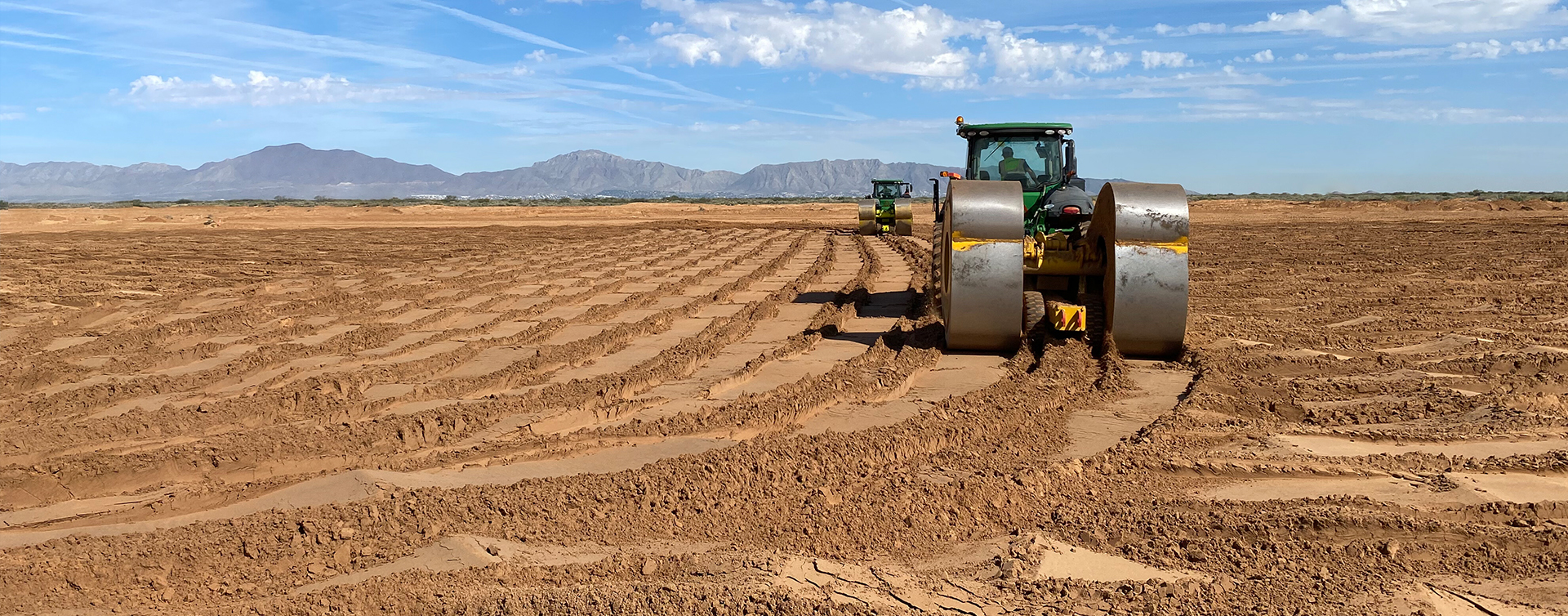
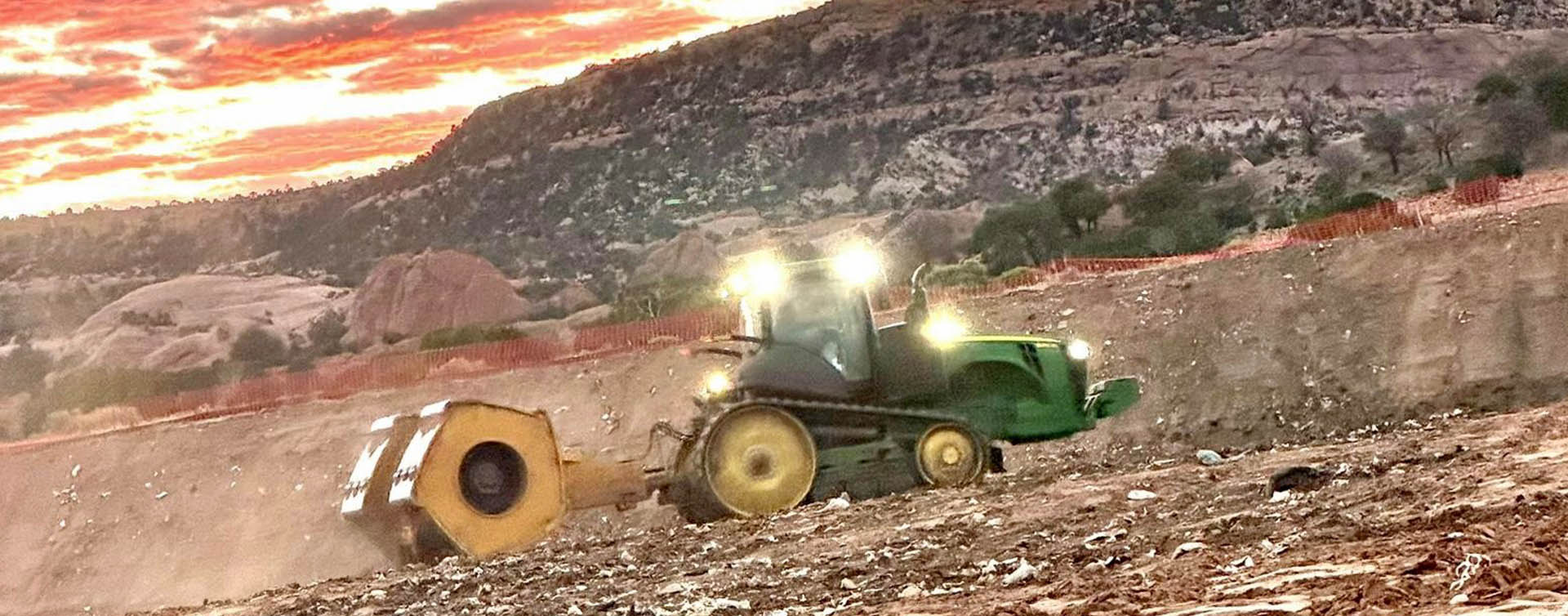
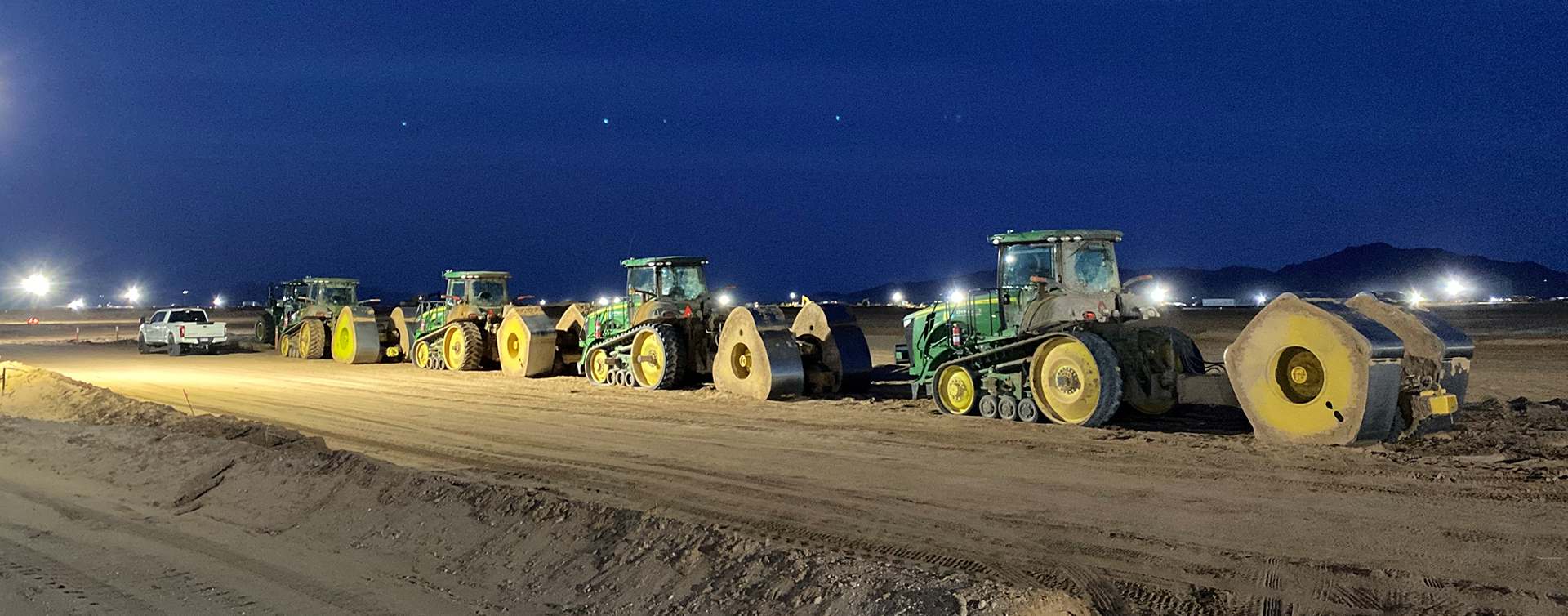
Why did the team pivot to HEIC? Unlike standard smooth-drum rollers that only compact the top few inches, High Energy Impact Compaction (HEIC) uses non-circular rotating masses to transfer energy deep into the soil profile.
As the module rotates, its eccentric geometry induces a cyclic rise in the centre of mass, building potential energy prior to impact. This energy is rapidly released on impact, generating a short-duration, high-magnitude impulse that transmits stress waves deep into the fill, mobilising particle rearrangement and collapse of void structures at depth. At Bishop Road, this allowed the compaction energy to reach depths of up to 15 feet, densifying the un-documented backfill to the point of “practical refusal”. HEIC acted as a rigorous proof roll, identifying and densifying voids deep within the fill that traditional equipment simply couldn’t reach.
The Results: Data-Backed Ground Improvement
Using Dynamic Compaction Solutions and a standard protocol of 40–46 surface passes, the site was transformed into a stable engineering platform. The data spoke for itself:
- Massive Cost Savings: The HEIC approach delivered up to 15X cost savings compared to the proposed 12.5-foot over-excavation.
- Exceptional Uniformity: The ground moved from highly heterogeneous conditions (54% variability) to a highly uniform state with a 4% Coefficient of Variation.
- Proven Strength: CPT results showed an average improvement of 31.25%, with specific locations showing up to 91.5% improvement.
The DCS Advantage
By implementing HEIC, Dynamic Compaction Solutions mitigated the risk of differential settlement and accelerated the mine’s ability to access coal deposits. When dealing with deep, undocumented fills, HEIC isn’t just an alternative, it’s the superior ground improvement solution for modern transport infrastructure.
Looking for a verified ground improvement solution? Contact Dynamic Compaction Solutions at (970) 222 6825.